Plant Cell Wall Shape - B Plant Cells / Plant cell wall is a dynamic network highly organized which changes throughout the life of the cell.. Plant cell shape, seen as an integrative output, is of considerable interest in various fields, such as cell wall research, cytoskeleton dynamics and biomechanics. To have a better understanding of the same, let us take a detailed look at the plant cell, its structure, and functions of different plant cell organelles. It forms the outer lining of the cell. Since protoplasts are invariably round, this is good evidence that the wall ultimately determines the shape of plant cells. It has a perfect polygonal, or rectangular shape.
Providing mechanical strength, support, and rigidity to the cell. Plant cell wall patterning and cell shape looks at the diverse function of cell walls in plant development, intercellular communication, and defining cell shape. In addition to defining the shape of plant cells, a cell wall has a few other functions that include maintaining the structural integrity of a cell, acting as a line of defense against a variety of external factors as well as hosting various channels, pores and receptors that regulate various functions of a cell. Plant cells are eukaryotic cells i.e., the dna in a plant cell is enclosed within the nucleus. Regardless of composition, all plant cell walls have small holes, or pits, that allow for the transport of water, nutrients, and other molecules.
Coordination Of Plant Cell Division And Expansion In A Simple Morphogenetic System Pnas from www.pnas.org This shape is provided by the cell wall covering the cell membrane. Hydraulic turgor pressure creates this rigidity, along with the wall structure. (d) all a, b and c Organ shaping requires control over cell wall expansion anisotropy. Plant cell unlike animal cell is rigid and strong. The cell wall is the outer covering of a cell, present adjacent to the cell membrane, which is also called the plasma membrane. Rigid cell walls give the plant cells their regular shape. Cell walls are defining feature of plant life.
Animal cells just have the membrane.
However, plant cells also have a specialized structure. Maintaining/determining cell shape (analogous to an external skeleton for every cell). This shape is provided by the cell wall covering the cell membrane. Providing mechanical strength, support, and rigidity to the cell. However, animal cells do not have a cell wall but only the plasma membrane. Pagei plant cell wall patterning and cell shape Plant cells are eukaryotic cells present in green plants, photosynthetic eukaryotes of the kingdom plantae.their distinctive features include primary cell walls containing cellulose, hemicelluloses and pectin, the presence of plastids with the capability to perform photosynthesis and store starch, a large vacuole that regulates turgor pressure, the absence of flagella or centrioles, except in. So, they do not have a defined shape. It has a perfect polygonal, or rectangular shape. Plant cell wall is a dynamic network highly organized which changes throughout the life of the cell. This structure is caused by the cell wall which is very rigid and therefore forces the cell to have a defined shape. Plant cells are not necessarily square, but they due tend to have distinct edges and be somewhat rectangular. Transports sugars and other molecules created by plant.
Both plant cells and animal cells have flexible membranes, but these are inside walls in plant cells, sort of like a trash bag in a trash can. Plant cells have a cell wall which provides structural integrity to the cell. Plant cells are eukaryotic cells i.e., the dna in a plant cell is enclosed within the nucleus. Animal cells are round and irregular in shape while plant cells have fixed, rectangular shapes. Maintaining/determining cell shape (analogous to an external skeleton for every cell).
Plant Cell Mindmap Eksempel from www.mindomo.com Let us have a detailed look at the plant cell, its structure and functions of different plant cell organelles. The most important distinctive structure of plant cell is the presence of the cell wall outside the cell membrane. The plant cell is surrounded by a cell wall which is responsible for providing shape to the plant cell. Plant cell wall (a) provide rigidity to the cell (b) maintains cell shape (c) prevents expansion of cell (d) all a, b and c. Plant cell wall, highlighting the biological effects of plant cell wall derivatives and their current applications. Focusing on multicellular organs, i survey the occurrence of expansion anisotropy and discuss its causes and proposed controls. Xylem and phloem movement wall and outer cells. 11 aug, 2021 post a comment the cell wall of a collenchyma is much thicker than those of a parenchyma and the cell wall is irregular in shape.
Providing shape to the plant.
As mentioned earlier, the cell wall is present in all plant cells, fungi, bacteria, algae, and some archaea. Animal cells are round and irregular in shape while plant cells have fixed, rectangular shapes. Cell walls are defining feature of plant life. This shape is provided by the cell wall covering the cell membrane. Focusing on multicellular organs, i survey the occurrence of expansion anisotropy and discuss its causes and proposed controls. Providing shape to the plant. It forms the outer lining of the cell. Expansion anisotropy of a unit area of cell wall is characterized by the direction and degree of anisotropy. Plant cell wall, highlighting the biological effects of plant cell wall derivatives and their current applications. Hydraulic turgor pressure creates this rigidity, along with the wall structure. Plant cell wall patterning and cell shape looks at the diverse function of cell walls in plant development, inte… Plant cells are eukaryotic cells i.e., the dna in a plant cell is enclosed within the nucleus. Phloem two way flow end walls and living outer cells but need support.
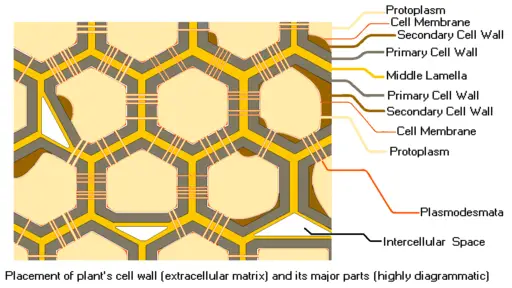
Cell walls are defining feature of plant life. Apart from the cell wall, there are other organelles that are associated with different cellular activities. From the outermost layer of the cell wall, these layers are identified as the middle lamella, primary cell wall, and secondary cell wall. Providing mechanical strength, support, and rigidity to the cell. Transports sugars and other molecules created by plant.
Cell Wall Definition Function Structure Location Vs Cell Membrane from www.microscopemaster.com Xylem one way roots up no continuous wall and dead outer cells. Plant cell unlike animal cell is rigid and strong. In most cells, the cell wall is flexible, meaning that it will bend rather than holding a fixed shape, but has considerable tensile strength. Animal cells are round and irregular in shape while plant cells have fixed, rectangular shapes. Plant cell walls all plant cells have a plasma membrane just like an animal cell, which provides the same barrier and regulates transport. So, they do not have a defined shape. Cell walls are defining feature of plant life. Plant cell wall patterning and cell shape looks at the diverse function of cell walls in plant development, inte…
Regardless of composition, all plant cell walls have small holes, or pits, that allow for the transport of water, nutrients, and other molecules.
Phloem two way flow end walls and living outer cells but need support. Plant cells are eukaryotic cells i.e., the dna in a plant cell is enclosed within the nucleus. As mentioned earlier, the cell wall is present in all plant cells, fungi, bacteria, algae, and some archaea. Organ shaping requires control over cell wall expansion anisotropy. Plasmodesmata span the resulting channel and connect the cytoplasm of neighboring cells. It forms the outer lining of the cell. Focusing on multicellular organs, i survey the occurrence of expansion anisotropy and discuss its causes and proposed controls. Hydraulic turgor pressure creates this rigidity, along with the wall structure. However, animal cells do not have a cell wall but only the plasma membrane. Riesenauswahl an produkten für zuhause. From the outermost layer of the cell wall, these layers are identified as the middle lamella, primary cell wall, and secondary cell wall. The plant cell is surrounded by a cell wall which is responsible for providing shape to the plant cell. Animal cells do have a little more variety because plant cells have rigid cell walls.
Share :
Post a Comment
for "Plant Cell Wall Shape - B Plant Cells / Plant cell wall is a dynamic network highly organized which changes throughout the life of the cell."


Post a Comment for "Plant Cell Wall Shape - B Plant Cells / Plant cell wall is a dynamic network highly organized which changes throughout the life of the cell."